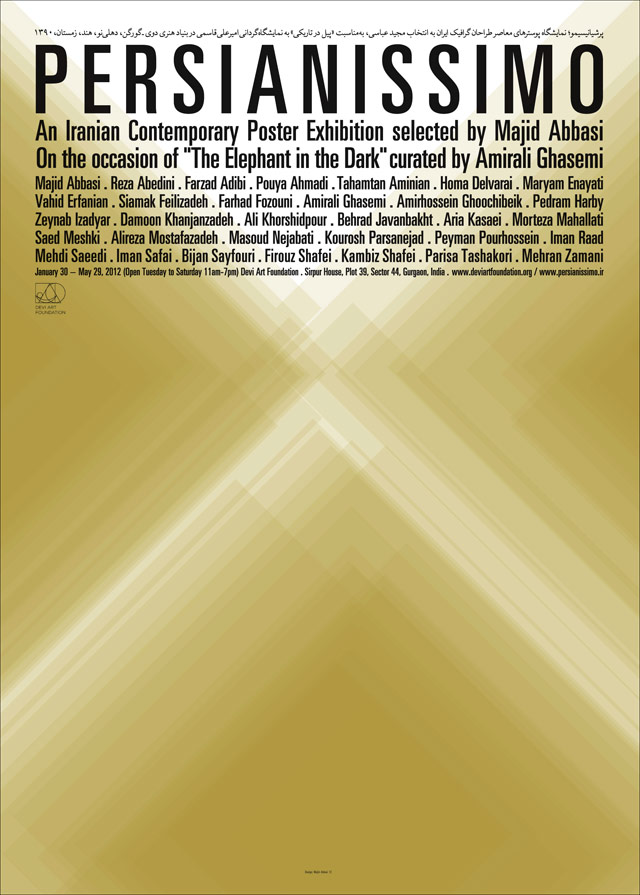
Persianissimo, Iranian Contemporary Posters at Devi Art Foundation

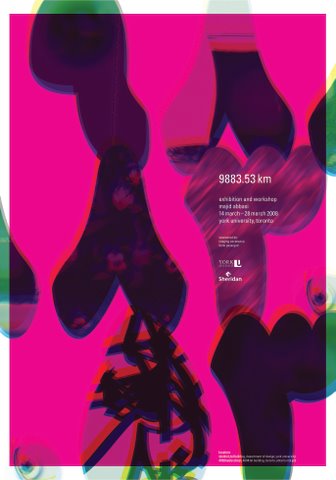
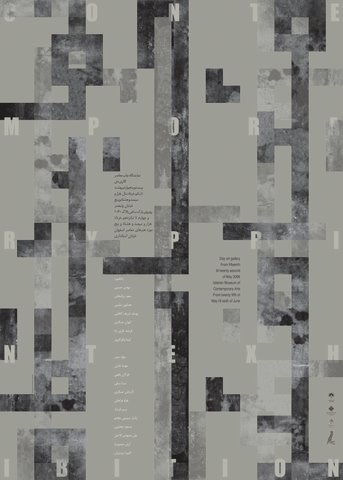
Persianissimo at Devi art Foundation, India Poster designed by Majid Abbasi

Persianissimo
An Iranian Contemporary Poster Exhibition
selected by Majid Abbasi
January 25-May 30, 2012
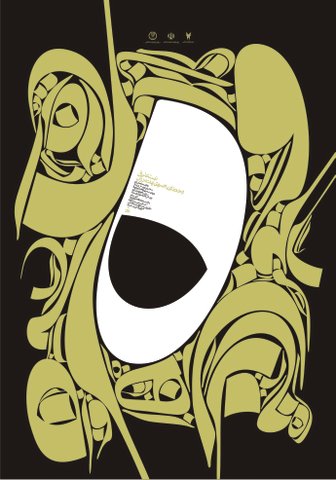
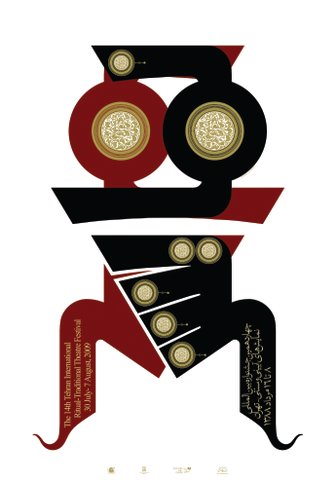
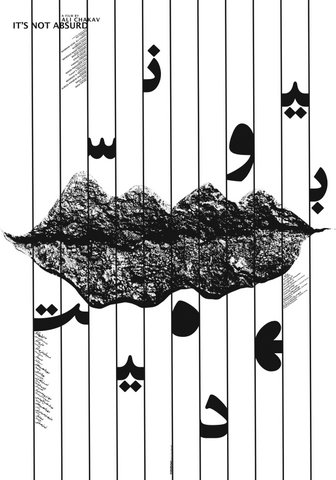
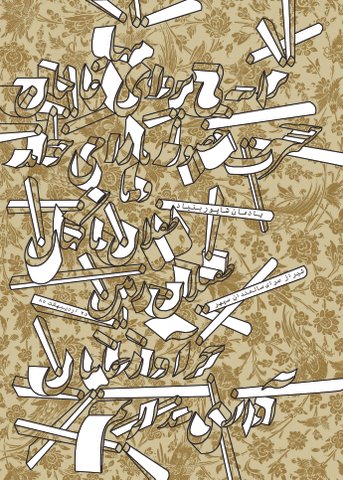
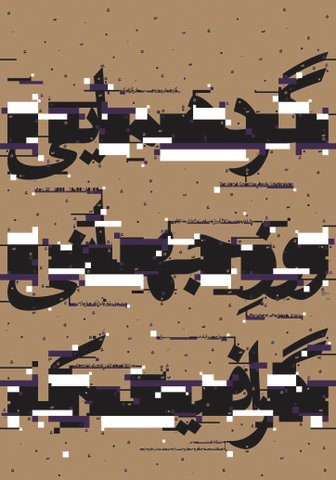
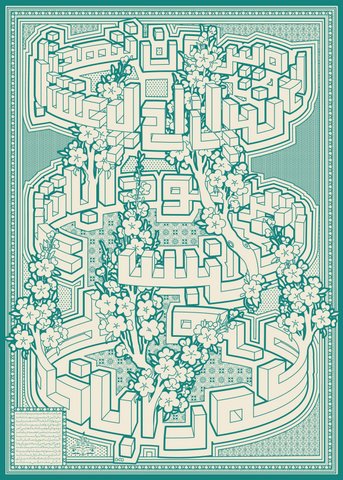
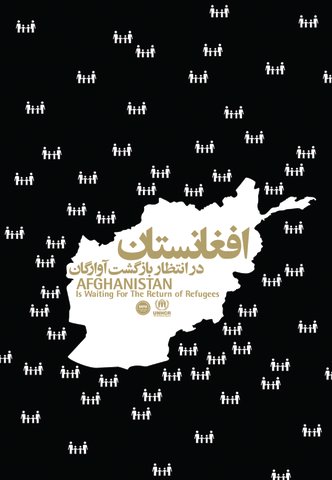
The Elephant in the Dark is accompanied by a contemporary Iranian poster exhibition called Persianissimo. These thirty-two posters are works of different graphic designers and are selected by Majid Abbasi, member of the Iranian Graphic Designers Society and founder of Neshan, an Iranian Graphic Design Magazine. Persianissimo was first displayed at Colorado State University in 2009, during the 16th Colorado International Invitational Poster Exhibition. Ever since, the exhibition has been traveling and has grown in terms of content.

Persianissimo, an exhibition of Iranian graphic designers’ works, originally was held in Colorado State University as a part of the 16th Colorado International Invitational Poster Exhibition (2009). There, 28 posters by 28 Iranian designers, selected by Majid Abbasi, were displayed in Fort Collins Museum of Contemporary Art. The exhibition is now part of the permanent collection in Colorado State University and it is to be displayed in other universities and galleries such as Fine Arts Faculty of Marmara University in Istanbul, Eastern Mediterranean University in Famagusta, Faculty of Design and Art at Free University in Bolzano, Harbourfront Centre in Toronto, Gallery of Villa Decius in Krakow.

Persianissimo is a group exhibition of 34 designers from the contemporary generation held in different parts of the world. The new generation of the Iranian graphic designers, mostly active after the 1979 revolution and the Iran-Iraq war (1980-88), changed the aforementioned graphic design scene in Iran. The audacity and the new ideas of the young graphic designers in using Iranian typography, considering the modern technology, their lyricism as well as searching for new concepts with a new image of the Iran, are a few of their achievements thus far. And now they claim a national graphic design with high standards. Today’s Iranian graphics has become internationally recognized thanks to these designers’ works and their permanent presence in international festivals, biennials and competitions which have won them numerous awards at world-class level.

This exhibition is being updated regularly; more designers are joining in and it is becoming more encompassing as the number of the collection increases.

Persianissimo is a manifestation of Iran’s today poster design. This collection has been exhibited internationally by the cooperation of museums, galleries, art centers, design associations and art and design schools. Presenting this collection will be of great significance in making Iran’s contemporary poster design known internationally.

Persianissimo is a blend of issimo from Italian language which is derived from music and its concept id known all over the world.
Exhibition Website: www.persianissimo.ir

Special thanks: Reza Abedini, Farzad Adibi, Pouya Ahmadi, Tahamtan Aminian, Homa Delvarai, Maryam Enayati, Vahid Erfanian, Siavash Fani, Siamak Feilizadeh, Farhad Fozouni, Amirali Ghasemi, Amirhossein Ghoochibeik, Pedram Harby, Behrouz Hariri, Zeynab Izadyar, Damoon Khanjanzadeh, Ali Khorshidpour, Behrad Javanbakht, Aria Kasaei, Morteza Mahallati, Saed Meshki, Alireza Mostafazadeh, Masoud Nejabati, Kourosh Parsanejad, Peyman Pourhossein, Iman Raad, Mehdi Saeedi, Iman Safai, Bijan Sayfouri, Firouz and Kambiz Shafei, Parisa Tashakori, Mehran Zamani.

About The Curator:

Majid Abbasi born in 1965 in Tehran, where he still lives today, Abbasi graduated from the Faculty of Fine Arts at the University of Tehran in 1996 in visual communication. It was in this same year, having already enjoyed numerous freelance design commissions, that Abbasi set up his prestigious studio, Did Graphics Inc., with partner Firouz Shafei. Also a lecturer at the University of Tehran, following Morteza Momayez’ invitation to join the university’s Faculty of Fine Arts 2003-2007, Abbasi has been a member of the board and treasurer of the Iranian Graphic Designers Society (IGDS) in 2003-2006.
A more recent venture has seen the launch of Neshan, the Iranian graphic design magazine for which Abbasi sits on the editorial board, while he is also a founder of The 5th Color, a collective formed by what he describes as “the new generation of Iranian graphic designers”.
Abbasi’s work has been published in numerous international magazines and books. In addition to this, since 1999, Abbasi has participated in many national and international exhibitions. His works are presented in museums, collections and galleries around the world and he has also received many national and international awards in recent years.
He is a member of Alliance Graphique International (AGI) since 2009.

Devi Art Foundation
Sirpur House, Plot 39, Sector 44
Gurgaon 122003, Haryana, India
Closest metro station: Huda City Centre
Visiting Hours: 11am to 7pm, Tuesday to Sunday
Closed on Mondays and all public holidays
For more information please write to
info@deviartfoundation.org or call +91 124 488 8111
www.deviartfoundation.org
The Elephant in The Dark at Devi Art Foundation, India

THE ELEPHANT IN THE DARK

Curated by Amirali Ghasemi
January 25-May 30, 2012

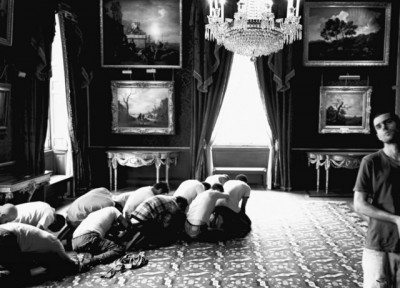
Reza Aramesh, Action 72, 2009 - Black and White Silver Gelatin Print, 124 x 170 cm
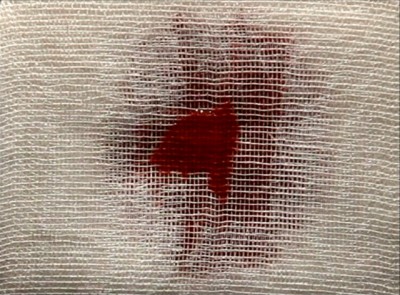
Gohar Dashti, Slow Decay, 2010 - HD Video, Color / No Sound, 6 min 50 sec

Devi Art Foundation presents The Elephant in the Dark curated by Amirali Ghasemi from 25th January to
30th May 2012, which brings together works of fifty-two contemporary Iranian artists from the Lekha and Anupam Poddar Collection.

“An elephant was put in a dark house for display. Crowds of people were asked to identify the object in the dark place by inspection. Each visitor felt with his palm a different part of the animal’s body, and thusdescribed the animal’s physical reality differently.

The palm of one fell on the trunk.
‘This creature is like a water-spout,’ he said.

The hand of another lighted on the elephant’s ear.
To him the beat was evidently like a fan.

Another rubbed against its leg.
‘I found the elephant’s shape is like a pillar,’ he said.

Another laid his hand on its back.
‘Certainly this elephant was like a throne,’ he said.

The sensual eye is just like the palm of the hand.
The palm has not the means of covering the whole of the truth.”

The exhibition borrows its title from a poem by Rumi, which was inspired by an ancient story of The Elephant and the Blind. The poet cleverly changes the dramatic state of blindness into darkness which has a cure, while the poem illustrates how complex it is to evaluate an event, situation or an object by seeing it from a particular angle and not as a whole. It underlines the incapability of human beings to understand various realities (physical and metaphysical), without using all senses and various means of understanding.

Taking Rumi’s poetic tale as a point of departure, the exhibition attempts to display both formal and conceptual practices that Iranian artists have adopted over the past decade, both inside and outside the country, to express their concerns. The vast selection of works in the collection provides a unique opportunity to present a comprehensive narrative of the social and artistic developments that are taking shape among the artists.

This diverse and vibrant collection is explored through two parallel streams, which displays the works of internationally known artists and a selection of upcoming young artists. The exhibition is divided into three sections: in “Departure from Form”, the traditional form is re-contextualized and used for contemporary critical expressions. “Reflection of a Complex Society” questions social issues such as gender representation, a recurring trend in contemporary Iranian art. Finally, “The Politicized Scenery” showcases works that touch upon various conflicts ranging from the battle for oil in the Middle East to moments in Iranian political history with a keen eye on the current events in the last three years.

The Elephant in the Dark is an effort to investigate different contours of Iranian polity and society through contemporary modes of artistic enquires.

The Sleepers and The Walkers by Shirin Sabahi - 2011, Four Color Slides, Light Box, Stand Magnifier

The exhibition includes works by Samira Abbassy, Iman Afsarian, Aksbazi, Shirin Aliabadi, Samira Alikhanzadeh, Afruz Amighi, Mojtaba Amini, Nazgol Ansarinia, Kamrooz Aram, Reza Aramesh, Mehraneh Atashi, Shoja Azari, Mahmoud Bakhshi, Gohar Dashti, Alireza Dayani, Ala Ebtekar, Shirin Fakhim, Golnaz Fathi, Parastou Forouhar, Shadi Ghadirian, Amirali Ghasemi, Bita Ghezelayagh, Barbad Golshiri, Amirali Golriz, Ramin Haerizadeh, Rokni Haerizadeh, Elham Doost Haghighi, Khosrow Hassanzadeh, Ghazaleh Hedayat, Peyman Hooshmandzadeh, Shirazeh Houshiary, Katayoun Karami, Shahram Karimi, Simin Keramati, Abbas Kowsari, Farideh Lashai, Amir Mobed, Masoumeh Mozaffari, Pendar Nabipour, Timo Nasseri, Farah Ossouli, Leila Pazooki, Sara Rahbar, Mohsen Rastani, Shirin Sabahi, Hamed Sahihi, Zeinab Shahidi, Behnoosh Sharifi, Jinoos Taghizadeh, Newsha Tavakolian, Sadegh Tirafkan and Ali Zanjani.
The Elephant in the Dark is accompanied by a contemporary Iranian poster exhibition called Persianissimo. These thirty-two posters are works of different graphic designers and are selected by Majid Abbasi, member of the Iranian Graphic Designers Society and founder of Neshan, an Iranian Graphic Design Magazine. Persianissimo was first displayed at Colorado State University in 2009, during the 16th Colorado International Invitational Poster Exhibition. Ever since, the exhibition has been traveling and has grown in terms of content.

Devi Art Foundation
Sirpur House, Plot 39, Sector 44
Gurgaon 122003, Haryana, India
Closest metro station: Huda City Centre
Visiting Hours: 11am to 7pm, Tuesday to Sunday
Closed on Mondays and all public holidays
For more information please write to
info@deviartfoundation.org or call +91 124 488 8111
www.deviartfoundation.org
Continue reading The Elephant in The Dark at Devi Art Foundation, India →